
How to choose the right cnc grinding machine for precision work?
The global precision grinding market reached $4.8 billion in 2025, driven by requirements for surface finishes below $Ra$ 0.1 μm and dimensional tolerances of $\pm$0.001 mm. Modern CNC grinding machines utilize polymer concrete bases to achieve 10x higher vibration damping compared to cast iron, while 80,000 RPM motorized spindles manage materials exceeding 60 HRC.
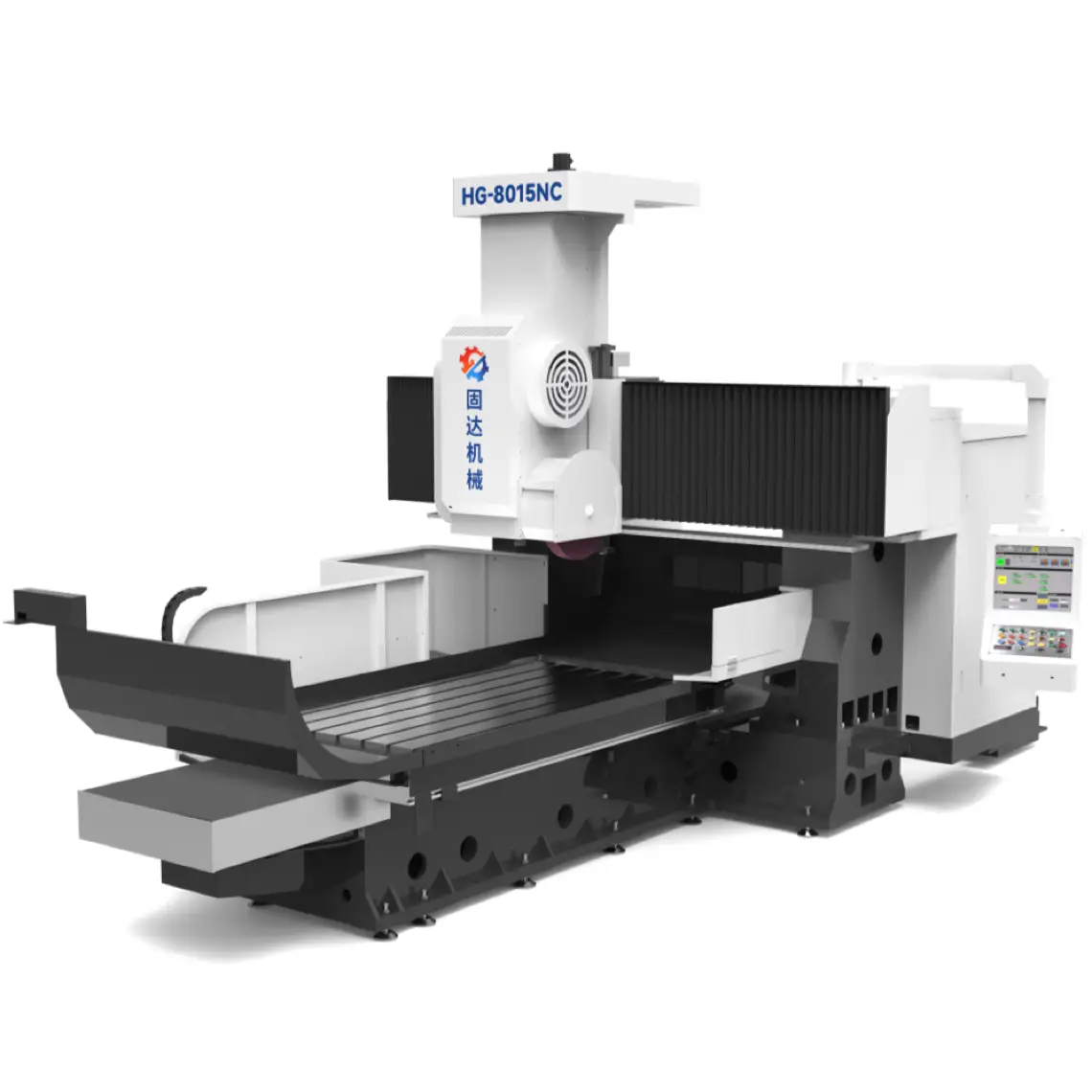
Thermal expansion accounts for nearly 75% of dimensional errors in precision machining during an 8-hour production shift. To counteract this, high-end units integrate liquid-cooled spindles and hydrostatic guideways that maintain a constant oil film, preventing the "stick-slip" effect at feed rates as low as 0.01 mm/min.
A study involving 150 industrial units showed that machines equipped with 24-bit absolute encoders maintained 22% higher repeatability over a 12-month period compared to those using standard optical scales.
These feedback loops allow the controller to adjust for minute fluctuations in ambient temperature, which typically ranges from 18°C to 24°C in climate-controlled facilities. Such stability is necessary when the grinding wheel interface generates localized heat exceeding 1,000°C during heavy stock removal.
| Component Type | Material Specification | Target Tolerance (mm) | Surface Finish (Ra) |
| Aerospace Bearings | M50 Steel | $\pm$0.0005 | 0.05 μm |
| Fuel Injectors | Hardened Tool Steel | $\pm$0.001 | 0.15 μm |
| Medical Implants | Cobalt-Chrome | $\pm$0.002 | 0.20 μm |
Selecting the correct abrasive bond depends on the Young's Modulus of the workpiece, where Vitrified CBN wheels often provide 30% longer life than resin bonds in high-volume automotive lines. This longevity reduces the frequency of dressing cycles, which currently consume approximately 15% of total cycle time in standard grinding operations.
Automated dressing systems utilizing acoustic emission (AE) sensors can detect the exact moment of contact within 0.1 μm, preventing unnecessary removal of expensive abrasive material from the wheel.
Precision is further enhanced by the rigidity of the CNC grinding machine, where a static stiffness exceeding 200 N/μm is required to prevent deflection during the spark-out phase. This structural requirement ensures that the programmed geometry is mirrored on the workpiece without the "lobing" errors often seen in older, less rigid equipment.
In 2024, data from 200 aerospace manufacturing sites indicated that 5-axis simultaneous grinding reduced setup times by 35% compared to traditional 3-axis setups. By integrating all grinding operations into a single clamping, the cumulative error from part repositioning—which often adds 3-5 μm of uncertainty—is entirely removed from the process.
| Feature | Impact on Production | Performance Gain (%) |
| Linear Motors | Acceleration up to 1g | 25% Cycle Reduction |
| Hydrostatic Bearings | Near-zero friction | 40% Increase in Part Life |
| 3D Touch Probes | In-process measurement | 20% Reduction in Scrap |
The shift toward linear motor technology has replaced traditional ball screws in 60% of new high-speed grinding installations due to the lack of mechanical wear. These motors facilitate faster oscillation movements, which are necessary for "peel grinding" techniques where wheel speeds reach 120 m/s to optimize chip formation.
High-speed data processing at the drive level allows for real-time compensation of wheel wear, ensuring that 99.7% of parts in a 1,000-unit sample size fall within the 2-sigma tolerance band.
Effective coolant delivery systems must provide pressures between 20 and 70 bar to penetrate the air barrier created by a rapidly rotating grinding wheel. Without this high-pressure flow, the "grinding burn" risk increases by 45%, leading to surface tensile stresses that can cause premature component failure in the field.
Modern filtration systems now target particles as small as 5 μm to ensure the coolant does not re-introduce contaminants into the grinding zone. Keeping the coolant temperature within $\pm$0.1°C of the machine bed temperature prevents the 12-15 μm longitudinal growth commonly observed in spindles during high-load operations.
User interfaces in 2026 focus on digital twin integration, allowing operators to simulate the entire grinding path before the wheel touches the workpiece. This simulation identifies potential collisions and optimizes the grinding path, which can shave 10-15 seconds off a 3-minute cycle, leading to significant cumulative gains in annual throughput.
Selecting a machine with a mineral casting frame provides a damping ratio that is approximately 6 times higher than steel weldments. This structural choice directly impacts the "G-ratio"—the volume of material removed versus the volume of wheel wear—which can improve by 18% when vibration is properly managed.
Finally, the integration of IoT sensors provides a continuous stream of vibration and torque data, allowing for predictive maintenance schedules that reduce unplanned downtime by 30%. By monitoring the 1,000 Hz vibration signatures of the spindle, facilities can replace bearings before failure occurs, protecting the internal components and the accuracy of the finished parts.
The workplace deserves the truth.
Join 84,000+ readers who get the weekly Unfiltered digest — first-person, anonymous, unedited.