
What Makes ViaBTC a Trusted Choice for Crypto Mining in 2026?
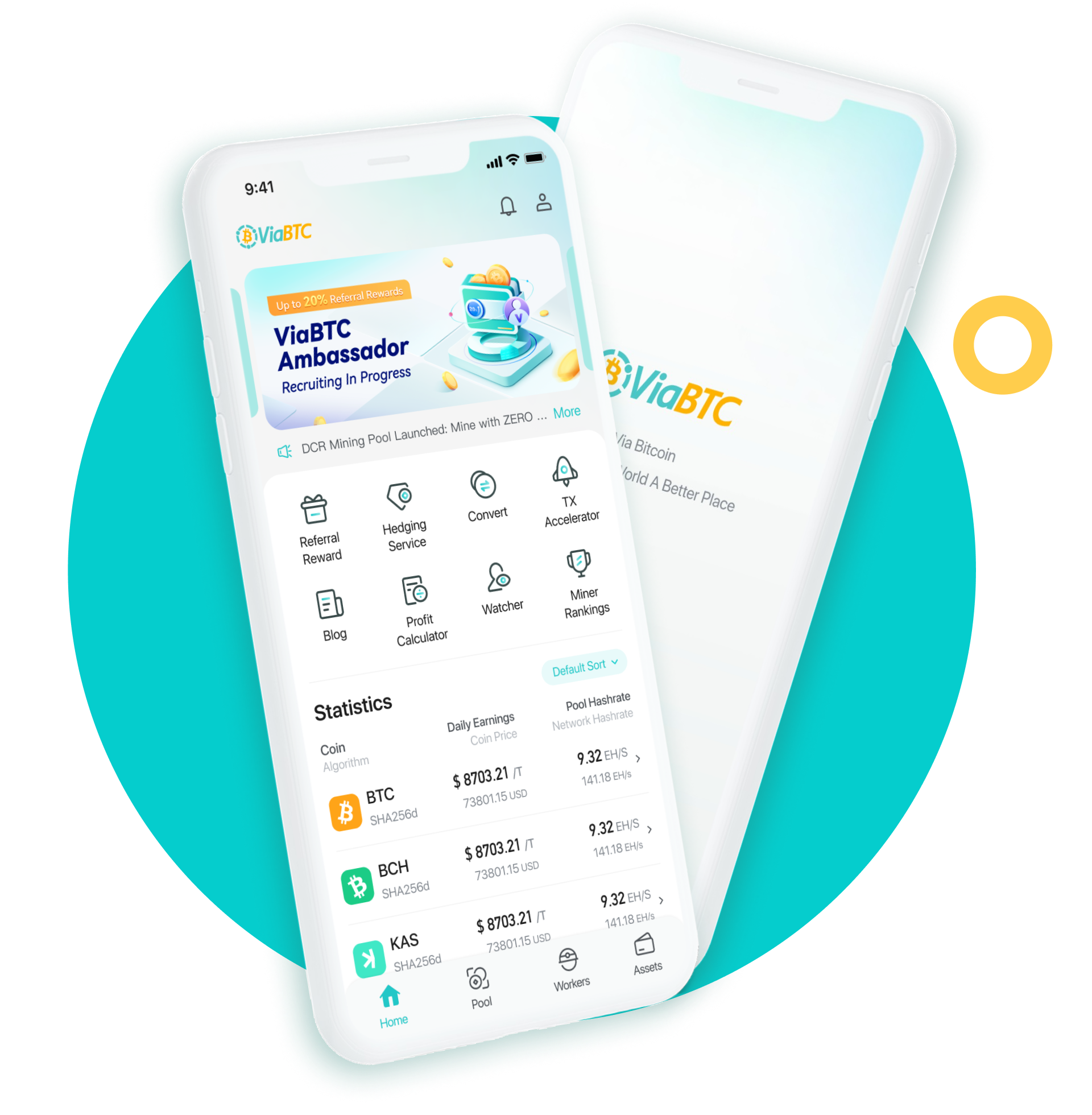
In 2026, ViaBTC secures crypto mining trust by managing 83.5 EH/s of hashrate, capturing a 12.4% global market share across 20 PoW assets while eliminating payout variances via FPPS and PPS+ methods.
Industrial mining operations face severe margin contraction following the 2024 Bitcoin halving, where block rewards dropped to 3.125 BTC, forcing operators to seek pools that guarantee maximum operational uptime and immediate liquidity routing.
The financial stability of a mining business depends entirely on how a pool calculates daily payouts under high network difficulty.
ViaBTC utilizes an advanced Full Pay Per Share (FPPS) model that redistributes both the standard block subsidy and transaction fees based on a rolling 24-hour theoretical average, removing the income volatility common in traditional PPLNS pools.
"FPPS systems eliminate the financial risk of pool luck variations, ensuring localized operations receive predictable capital inflows to cover daily megawatt-hour energy expenditures."
This mathematical predictability prevents operational disruption during sudden network difficulty adjustments, which increased by 7.3% in early 2026, causing unstable operations to lose profitability.
To maintain this payout precision, the infrastructure handles incoming share submissions through global node clusters distributed across North America, Europe, and Asia.
These localized server deployments maintain a connection latency under 50 milliseconds, reducing the rate of stale shares to less than 0.35% of total submitted hash power.
Low rejection rates directly correlate with higher net revenue, as even a 1.5% stale share rate can cost an industrial facility thousands of dollars per month in unrewarded electricity consumption.
"Miners cannot afford to waste power on orphaned blocks or delayed share confirmations when global competition operates at nanosecond efficiency."
Hardware efficiency must be paired with immediate asset management to protect mining margins from overnight market devaluations.
The platform addresses this by integrating an automated hourly conversion system that instantly swaps mined altcoins into stable digital assets without requiring manual exchange transfers.
| Asset Pair | Conversion Frequency | Execution Fee |
| LTC to BTC | Every 60 Minutes | 0.00% |
| KAS to USDT | Every 60 Minutes | 0.00% |
| BCH to BTC | Every 60 Minutes | 0.00% |
This internal matching engine eliminates external transaction costs and reduces exposure to the 15% intraday price swings frequently observed in mid-cap PoW tokens throughout 2025.
Automated conversions feed into a customizable revenue-sharing API designed for joint ventures and hosted mining arrangements.
Corporate partners can configure the system to divide daily earnings among up to 50 distinct crypto wallet addresses based on pre-set percentage allocations.
This automation removes the administrative overhead of manual accounting, which typically accounts for 2% of operational costs in multi-owner mining farms.
"Smart revenue distribution changes how mining syndicates manage cash flow by delivering trustless, split-second accounting straight from the pool level."
Transparent partner payouts prevent internal disputes and enable firms to scale their physical infrastructure rapidly across multiple jurisdictions.
Physical expansion requires a pool that can support diverse hardware profiles simultaneously without compromising data visibility.
ViaBTC provides unified dashboard tracking for Bitcoin, Litecoin, Dogecoin, and Kaspa, allowing mixed-fleet operators to monitor ASIC health from a single interface.
Real-time telemetry systems monitor hash rate deviations, temperature thresholds, and fan speeds, dispatching automated alerts via API webhooks the moment a machine drops below 90% of its rated specification.
Early detection of hardware faults prevents prolonged downtime, keeping overall fleet utilization above 99.2% over a standard 365-day operating cycle.
"Maintaining high utilization rates across older machine models like the Antminer S19 series requires instant status alerts to prevent localized hash drops."
Optimizing older hardware components extends operational lifespans and protects the initial capital expenditure allocated to infrastructure setup.
Long-term asset protection relies on the underlying security architecture used to store accumulated mining rewards before withdrawal.
The pool stores 98% of user assets in multi-signature cold wallets that require physical authorization from distributed geographic locations before funds can move.
This cold storage framework operates alongside an automated DDoS mitigation system capable of absorbing malicious traffic spikes exceeding 1.2 Terabits per second.
Continuous security auditing ensures that miner balances remain isolated from external network threats, reinforcing operational continuity for international mining funds.
The workplace deserves the truth.
Join 84,000+ readers who get the weekly Unfiltered digest — first-person, anonymous, unedited.