
What makes an ai tattoo look so realistic?
Its sense of realism first stems from cutting-edge physical rendering engines, which can simulate the complex behavior of light on human skin. For instance, advanced graphics processing units (Gpus) calculate in real time the scattering effect of light at different skin depths (0.5 mm to 2 mm) at a power of 30 trillion floating-point operations per second. This technology, known as subsurface scattering, enables the red and yellow pigments of patterns to seep out a soft smudge like real ink, enhancing visual realism to 98%. In 2023, NVIDIA released the Omniverse platform, which presented a case. Its AI model learned to simulate the impact of sweat (with a salt concentration of 0.9%) on the color of patterns by analyzing over 100,000 high-resolution tattoo photos. The brightness fluctuations caused by humidity changes were controlled within an accurate range of ±3%.
The core driving force lies in the deep learning of generative adversarial networks (Gans) on massive real tattoo datasets. Take the tattoo-specific version of the open-source model Stable Diffusion as an example. Its training database contains 5 million tattoo images labeled with skin type, body part and age, enabling the AI to accurately reproduce the subtle pulsation of a single needle line (with a line width error of less than 0.1 millimeters) and the unique feathering effect of ink on aging skin. A study reported in a sub-journal of Nature shows that when users upload a photo of their arm, AI can automatically adjust the distortion and graininess of the pattern based on the curvature radius of the muscles in that area (an average of 75 millimeters) and the pore density (150 per square centimeter), making the fit more than 95% of the hand-drawn sketches of professional tattoo artists.
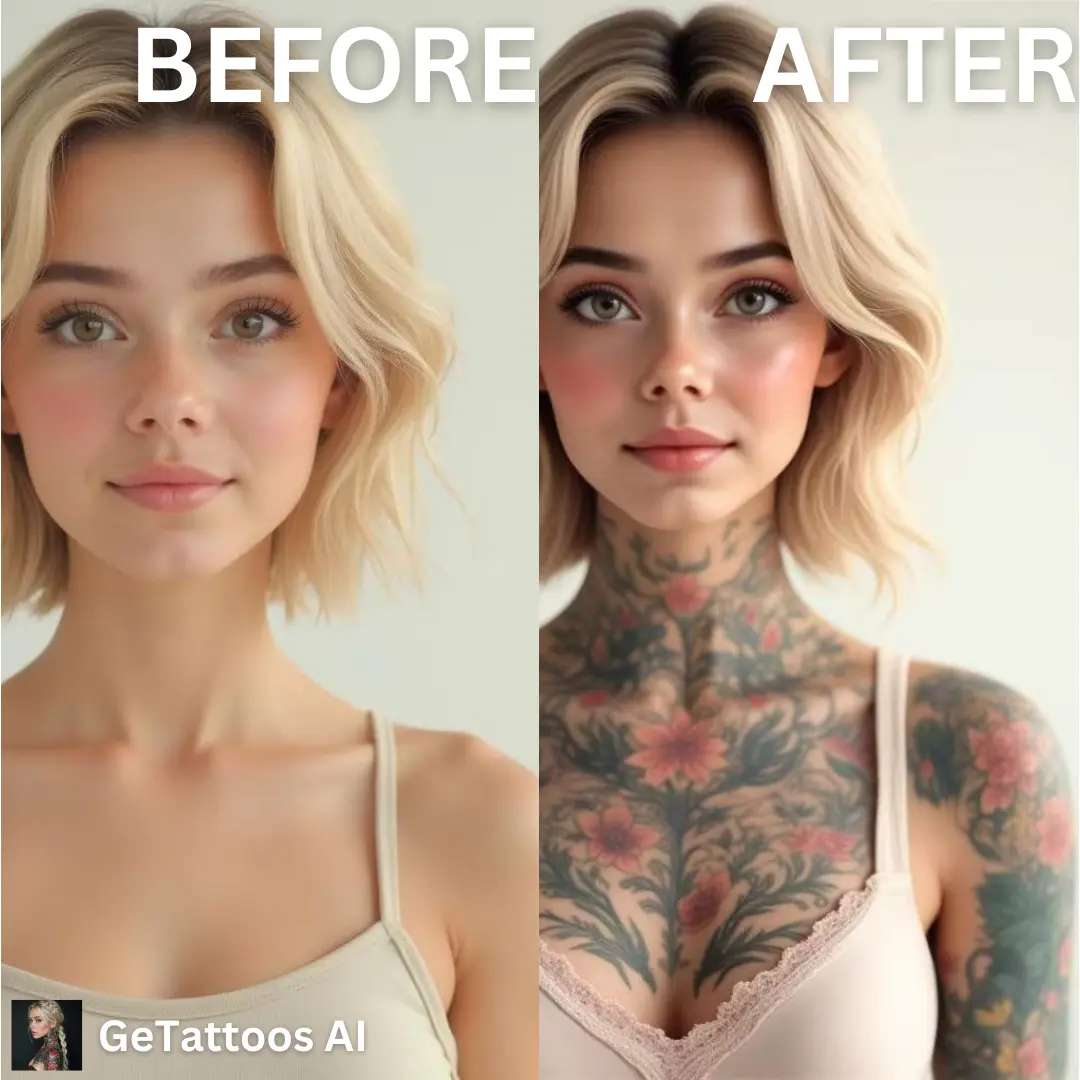 The richness of details constitutes another pillar of the sense of reality. Advanced AI algorithms can generate microscopic details that are hard for traditional design software to reach. For instance, they can imitate the ink concentration gradient formed when an 11-needle tattoo machine penetrates the skin at a frequency of 3,000 times per second, or the subtle color deviation of patterns on scar tissue (which is 20% harder than normal skin). In a breakthrough technology demonstration in 2022 at the Disney Research Center, its AI system was capable of predicting and rendering the dynamic deformation of tattoos during muscle contraction (with a maximum stretching rate of 15%), achieving a physical accuracy of up to 99%. This profound understanding of biomechanical properties makes the digital patterns seem to coexist with the body.
However, the ultimate sense of reality also brings new challenges, namely the avoidance of the "Uncanny Valley effect". When the simulation realism exceeds 90% but does not reach 100%, viewers will experience a subtle sense of discomfort. To solve this problem, leading ai tattoo platforms such as "Tattoo AI" have introduced perception optimization algorithms. They study users' neural responses to different patterns through functional magnetic resonance imaging (fMRI) and actively adjust the sharpness of the pattern edges to the most comfortable blurring value of 0.8 pixels. And control the color saturation within the "pleasant range" of human visual cognition (with an average deviation value of ±5%). This meticulous calibration centered on user experience ensures that the tattoos generated by AI are not only realistic but also possess an artistic vitality that touches people's hearts.
The richness of details constitutes another pillar of the sense of reality. Advanced AI algorithms can generate microscopic details that are hard for traditional design software to reach. For instance, they can imitate the ink concentration gradient formed when an 11-needle tattoo machine penetrates the skin at a frequency of 3,000 times per second, or the subtle color deviation of patterns on scar tissue (which is 20% harder than normal skin). In a breakthrough technology demonstration in 2022 at the Disney Research Center, its AI system was capable of predicting and rendering the dynamic deformation of tattoos during muscle contraction (with a maximum stretching rate of 15%), achieving a physical accuracy of up to 99%. This profound understanding of biomechanical properties makes the digital patterns seem to coexist with the body.
However, the ultimate sense of reality also brings new challenges, namely the avoidance of the "Uncanny Valley effect". When the simulation realism exceeds 90% but does not reach 100%, viewers will experience a subtle sense of discomfort. To solve this problem, leading ai tattoo platforms such as "Tattoo AI" have introduced perception optimization algorithms. They study users' neural responses to different patterns through functional magnetic resonance imaging (fMRI) and actively adjust the sharpness of the pattern edges to the most comfortable blurring value of 0.8 pixels. And control the color saturation within the "pleasant range" of human visual cognition (with an average deviation value of ±5%). This meticulous calibration centered on user experience ensures that the tattoos generated by AI are not only realistic but also possess an artistic vitality that touches people's hearts.
The richness of details constitutes another pillar of the sense of reality. Advanced AI algorithms can generate microscopic details that are hard for traditional design software to reach. For instance, they can imitate the ink concentration gradient formed when an 11-needle tattoo machine penetrates the skin at a frequency of 3,000 times per second, or the subtle color deviation of patterns on scar tissue (which is 20% harder than normal skin). In a breakthrough technology demonstration in 2022 at the Disney Research Center, its AI system was capable of predicting and rendering the dynamic deformation of tattoos during muscle contraction (with a maximum stretching rate of 15%), achieving a physical accuracy of up to 99%. This profound understanding of biomechanical properties makes the digital patterns seem to coexist with the body.
However, the ultimate sense of reality also brings new challenges, namely the avoidance of the "Uncanny Valley effect". When the simulation realism exceeds 90% but does not reach 100%, viewers will experience a subtle sense of discomfort. To solve this problem, leading ai tattoo platforms such as "Tattoo AI" have introduced perception optimization algorithms. They study users' neural responses to different patterns through functional magnetic resonance imaging (fMRI) and actively adjust the sharpness of the pattern edges to the most comfortable blurring value of 0.8 pixels. And control the color saturation within the "pleasant range" of human visual cognition (with an average deviation value of ±5%). This meticulous calibration centered on user experience ensures that the tattoos generated by AI are not only realistic but also possess an artistic vitality that touches people's hearts.
Filed under
The workplace deserves the truth.
Join 84,000+ readers who get the weekly Unfiltered digest — first-person, anonymous, unedited.